ART, ACTION, AND AWARENESS: THE CLEAN RIVER PROJECT
From the Moselle Valley to the North Sea, the Clean River Project has become one of Germany’s leading environmental education initiatives. Founded in 2012 by Stephan Horch, the project combines art, activism, and education to raise awareness about plastic pollution in waterways. What began as a personal photo project has grown into a national movement, with clean-ups, workshops, and exhibitions reaching more than 270,000 people. Through fellow paddler Leon Bast, Kayak Session caught up with Stephan to learn more about the origins of the Clean River Project, its mission, and the simple ways anyone can take part in protecting the rivers we all depend on.
« Only when I transformed the trash into art did it attract attention. Step by step, a photo project turned into the Clean River Project. »
Kayak Session: How and when did your passion for environmental protection begin, and how did you come to initiate the Clean River Project?
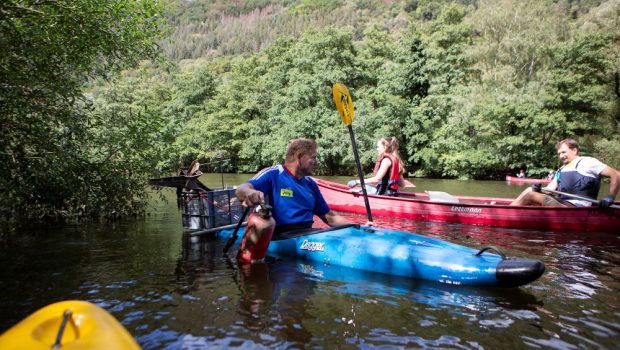
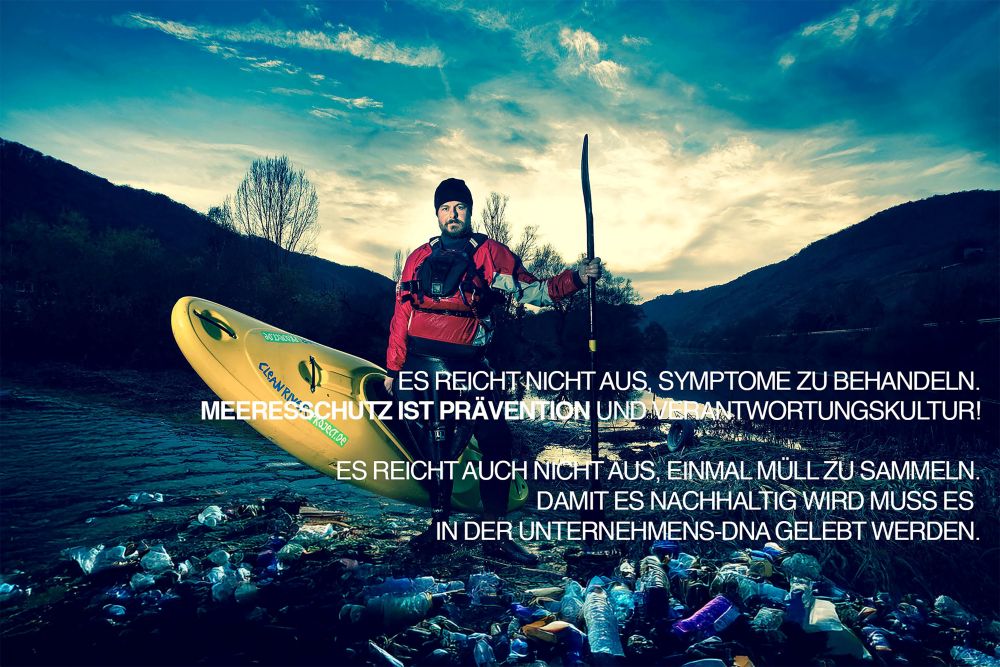
Stephan Horch: My passion for environmental protection was already present subconsciously as a child. I love being in nature, especially at the sea. Since there is a river right outside my door, it all started on the water in Koblenz—more precisely on the Rhine at the Postsportverein Koblenz e. V. When I was kayaking on the Moselle River, I became aware of how much trash floats in our rivers. As a photography designer, I wanted to document it, but no one felt addressed. Only when I transformed the trash into art did it attract attention. Step by step, a photo project turned into the Clean River Project—a combination of art, awareness, activism, and education.
KS: What is your goal, or what message do you want to give people?
SH: I am no longer alone in this; WE are a team working together to make environmental protection visible and tangible. Our goal is to show people that everyone can take responsibility. Real change does not come from individuals but from the community. When we understand that our rivers are lifelines connecting everything, it becomes clear how important it is to protect them. Every small contribution counts—a piece of trash less, one more conversation, one person who changes their mindset.
KS: Who can participate in a Clean-Up?
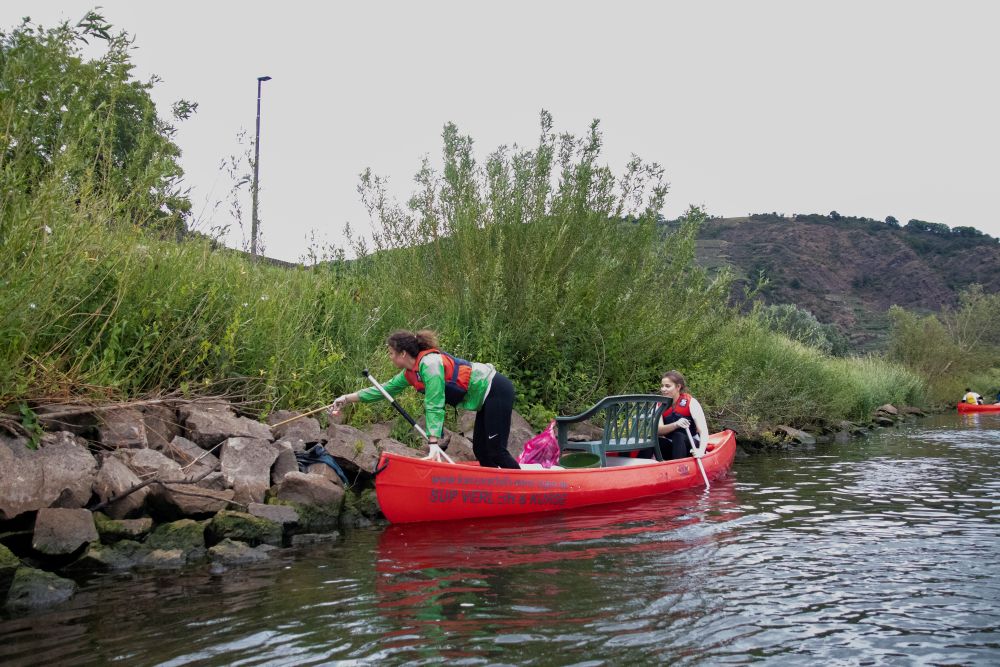
SH: Basically anyone! Young or old, experienced or not—everyone is welcome. Our Clean-Ups thrive on community and team spirit. It is especially important for us to involve young people, clubs, and companies. Working together simply makes it more fun and motivates everyone even more.
KS: What can one do to start similar projects in their club or community?
SH: Just start! You don’t need a big organization, just motivation. Begin on a small scale, educate yourself about waste disposal, and find local partners, such as municipalities or environmental groups. We are happy to share our experiences and show how Clean-Ups can be implemented easily, just reach out to us!
« Our Clean-Ups thrive on community and team spirit. It is especially important for us to involve young people, clubs, and companies. »
KS: How can one best get in touch with the CRP?
SH: The easiest way is through our website, www.cleanriverproject.de, or via our social media channels, especially Instagram. We share campaigns, dates, and behind-the-scenes insights there. Anyone who wants to get actively involved can contact us directly or sign up for our newsletter
KS: What programs does the CRP offer?
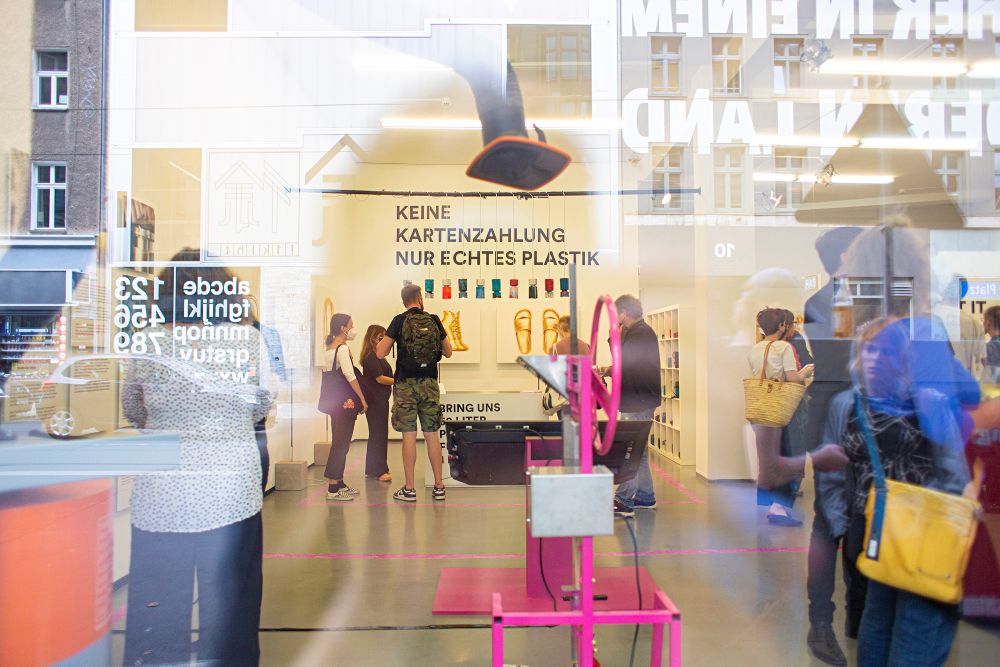
SH: In practice, we do Clean-Ups, educational work, and art projects. Our talks are particularly important because they reach people directly and emotionally. With impressive images, stories, and facts, we raise awareness of the plastic problem and show how everyone can be part of the solution. We also offer workshops for companies and clubs to promote environmental awareness creatively. Through exhibitions, collaborations, and our educational formats, we make sustainability tangible, especially for young people.
KS: What impact has the CRP had so far? Are there current figures on collected waste or saved water?
SH: Our kayak Clean-Up tours have ranged from Winningen to the North Sea in the Netherlands and from Koblenz to Berlin. Additionally, there have been numerous educational projects, nationwide exhibitions, and creative initiatives that inspired people to participate. To date, we have worked with over 60 schools and numerous companies in Clean-Ups, delivered around 40 lectures, and reached more than 270,000 visitors with our exhibitions. Projects like the Recycling Roadies and Clean River Kids create long-term impulses for environmental education and awareness. We have been recognized multiple times for our commitment, including the German Engagement Award, the Rhineland-Palatinate Environmental Award, and other honors such as the LupoLeo Award for the Recycling Roadies as Germany’s best educational project. A special recognition was the invitation from the Federal President to the Citizens’ Festival at Castle Bellevue.
KS: Where do you see the project in 5–8 years, and what are your hopes for the future?
SH: In five to eight years, I hope that even more people and organizations will come together to take action collectively. Networking is key; together, we can really make a difference. It is important to me that society learns to think preventively, instead of only acting when it is too late. It always makes me happy when we meet like-minded people because that is where movement—and hope—emerges.
Follow their Instagram page to keep updated with their projects.
Words: Leon Bast | Photography: Clean River Project

Related Posts
Hands Off Nature petition →
Common Waters, a film by Rig To Flip Productions →
Norway’s Raundalselva: saved. Norway’s Rivers: not so much. →